
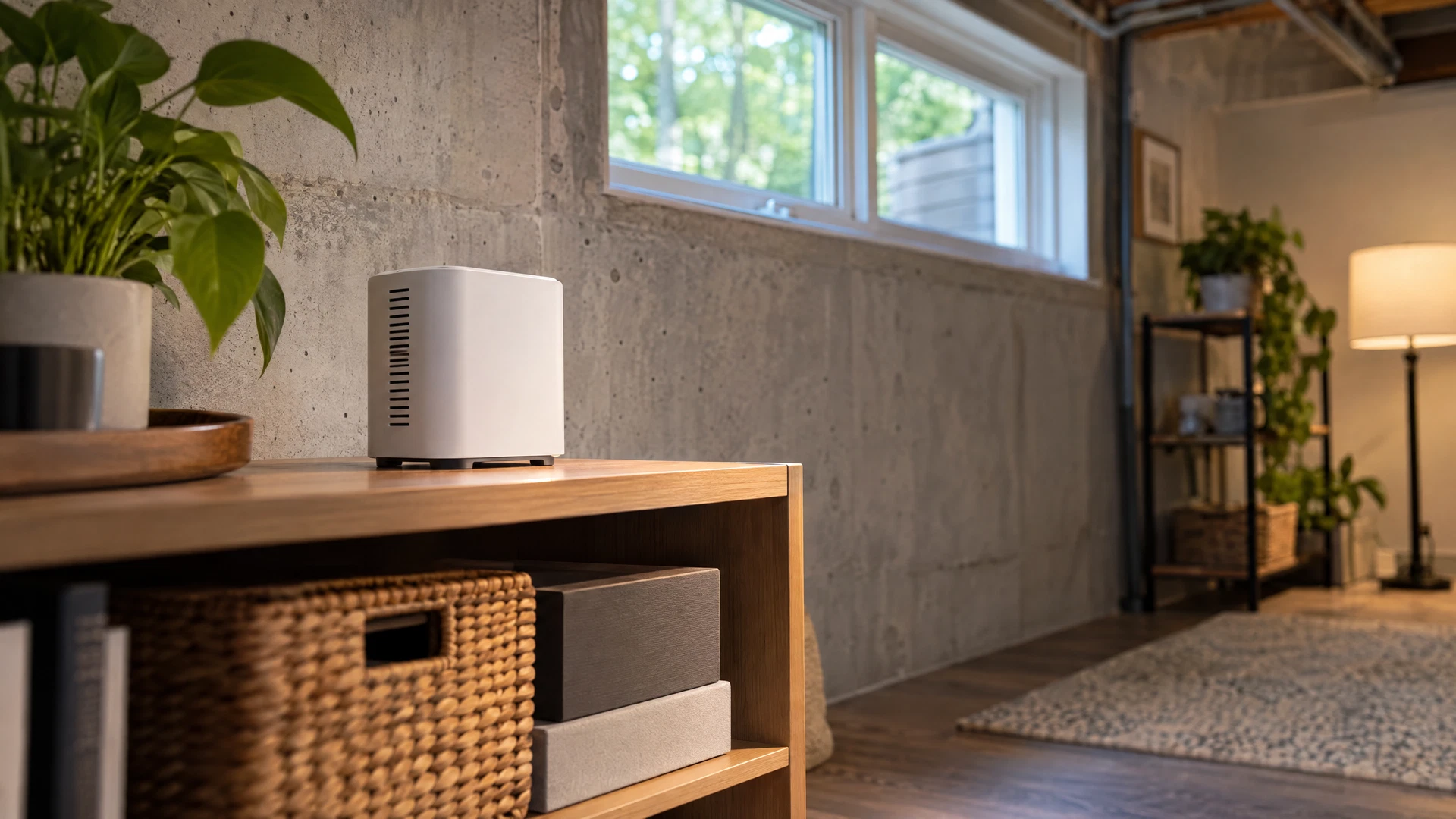
Radon is a radioactive gas that you cannot see, smell or taste. It forms through the natural breakdown of uranium in soil, rock and water, and it can enter a home from the ground. Prolonged exposure increases lung cancer risk. A home can look well maintained and still need radon reduction; a visual home inspection cannot measure the gas.
GR8 Home Inspections provides professional radon testing for buyers and homeowners in Greater Binghamton and the Southern Tier. Owner and lead inspector Doug Skinner, CMI, offers personal attention and clear explanations. Whether you are buying, preparing to sell or checking a home you already own, testing gives you property-specific information rather than an assumption.
Your neighbor's result is not your result
EPA advises against predicting indoor radon from state, local or neighborhood measurements. Even homes next door to each other can have different levels. A property's age, appearance or location is not a substitute for a measurement inside that home.
Previous results are useful background, but ask when and where the test was performed. Renovations or plans to use a lower level regularly may make a new test appropriate. Bring any prior reports and information about an existing radon system to the conversation.
Coordinate testing before deadlines become tight
Share your inspection or contract deadline when arranging radon testing. Testing requires a measurement period and access to the property; it is not an instant reading during a walkthrough. Confirm the proposed testing approach, preparation instructions, access arrangements and expected result timing before the test begins.
For a real estate transaction, EPA recommends testing the lowest level that could be used regularly, including a basement a buyer might use as living space. Explain how you intend to use the home so the test location can be considered appropriately. Short-term readings reflect the test period; longer-term testing better represents the year-round average because levels vary by day and season.
Prepare the home and protect the test
Follow the instructions provided for the specific test. Everyone with access needs to understand them, including sellers, tenants and anyone visiting the property. EPA's short-term testing checklist calls for a minimum of 48 hours, although some devices require longer.
- For a two- to four-day test, EPA calls for closed-house conditions for at least 12 hours beforehand and throughout the test. Keep exterior windows and doors closed except for normal entry and exit.
- Do not move, cover or disturb the test device. Coordinate access without changing its placement or interrupting the measurement.
- Follow instructions about heating, cooling and ventilation. Do not turn off an existing radon-reduction fan to prepare for testing.
- Tell the tester about severe weather, opened windows or other departures from the instructions. These can affect whether the result is usable.
Understand the number and the next step
Results are commonly reported in picocuries per liter of air, written pCi/L. EPA recommends fixing homes with radon levels of 4 pCi/L or higher and considering reduction between 2 and 4 pCi/L. A result below 4 is not a declaration of zero risk.
Interpret the reading alongside the test duration and conditions. Depending on the testing approach, follow-up measurement may be needed before deciding on mitigation, particularly near the action level. Ask what the result supports, what remains uncertain and whether additional testing would help. Keep the report with your property records.
What if testing shows elevated radon?
An elevated result starts a discussion about reducing radon, not a promise about a particular system or outcome. GR8 also offers radon mitigation. The home's foundation, layout and measured level help inform the appropriate approach; testing and mitigation are distinct services.
EPA does not recommend sealing foundation cracks as the only reduction method. After mitigation, a follow-up radon test checks the system's effectiveness. Discuss that verification and ongoing operation before work begins rather than assuming installation alone confirms a lower level.
Get a measurement, not a guess
Call or text Doug at (607) 222-2256 to discuss your property, testing preparation and any deadlines before arranging radon testing.
Schedule an inspection